9 min read
9 min read
Vault 5 Digital
16 August 2026
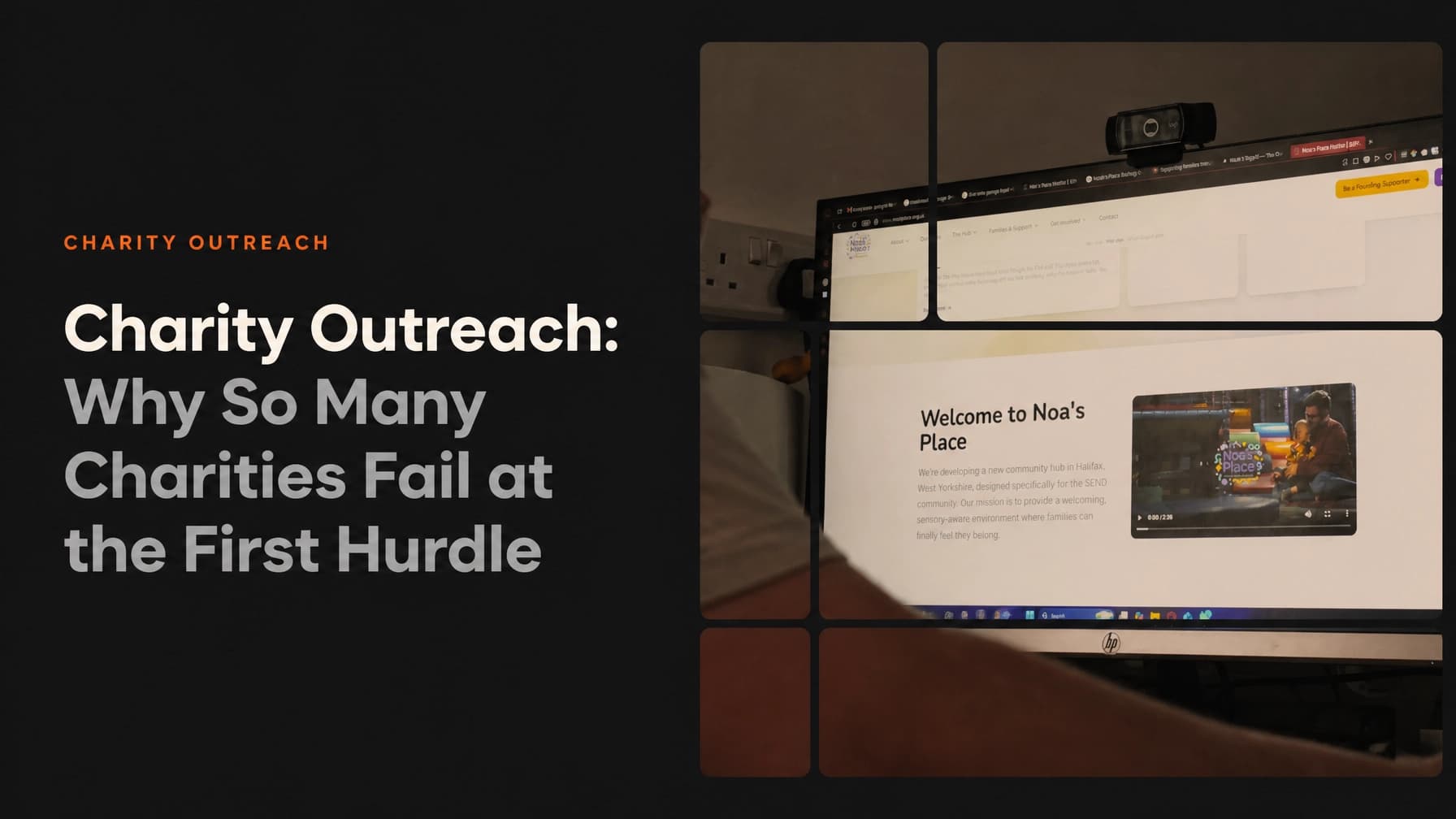
Your charity may have an important message, a strong service and a genuine need for support.
That doesn’t mean people will find you.
Effective outreach often fails before a potential supporter has donated, volunteered, signed up, made an enquiry or even understood what your organisation does. The problem usually isn’t a lack of commitment. It’s that the first step in the journey is unclear, difficult or invisible.
For small and mid-sized charities, this is especially common. Your team is busy delivering services, meeting demand, applying for funding and supporting the people who rely on you. Marketing gets pushed back because it feels less urgent.
But when outreach is inconsistent or difficult to act on, your charity misses opportunities every day.
Before someone can support your charity, they need to find you.
That sounds obvious, but many charities are difficult to discover online. Their website may not appear for relevant searches. Their social media accounts may be inactive. Their Google Business Profile may be incomplete. Their content may explain what the organisation does without making clear who it helps or what the reader should do next.
The Charity Digital Skills Report 2024, based on responses from 635 charities, found that building an online presence and social media engagement was a priority for 54% of respondents. Growing reach was a priority for 48%.
Yet the same report found that:
This creates a straightforward problem: your charity may be doing valuable work, but the people who need your service or want to support your cause may never reach you.
Visibility is not about posting more for the sake of it. It’s about making sure the right people can find a clear, trustworthy route to your organisation.
A common outreach mistake is trying to speak to everyone at once.
A charity website might say:
“We support our community through a range of services and programmes.”
That may be accurate, but it doesn’t give a visitor enough information to know whether the organisation is right for them.
A stronger message answers three questions quickly:
For example:
“We support disabled children and their families across Halifax with practical advice, activities and a welcoming community space.”
That is easier to understand. It gives the reader context and helps them decide what to do next.
Your outreach should then use the same language across your website, search adverts, social media, video and printed materials. When every channel describes your charity differently, people have to work too hard to understand you.
Clarity builds confidence. Confusion creates drop-off.
You may get someone to click an advert, open an email or visit your social profile. That’s only the beginning.
If the next page is slow, outdated or difficult to use, the opportunity can disappear quickly.
A visitor may be looking for:
If they can’t find that information within a few seconds, many will leave.
Your website should be built around the actions that matter most to your charity. The Vault 5 web design and maintenance service takes this approach by planning pages around what supporters and service users need to do : whether that’s donating, volunteering, getting referred or making contact.
A strong outreach journey usually looks like this:
Find you → understand you → trust you → take action.
If the website interrupts that sequence, more promotion won’t solve the underlying issue.
You’ll simply send more people to a page that loses them.

Another reason outreach fails is over-reliance on a single platform.
Some charities depend entirely on Facebook. Others rely on word of mouth, occasional newsletters or one annual fundraising campaign. These channels can all be useful, but none should carry the whole weight of your outreach.
Platforms change. Algorithms change. Email lists become inactive. People move house, change jobs or stop using particular social networks.
A more reliable approach gives your charity several ways to be found:
This doesn’t mean your team needs to create content for every platform every day. It means your outreach should have a joined-up structure.
One story can become a website article, a short video, a social post, an email update and a Google Business Profile update. The work becomes more manageable when you plan it properly.
Many eligible charities also miss a valuable route to visibility through the Google Ad Grant.
The programme can provide up to £90,000 a year in Google advertising credit for eligible charities. It can help promote services, campaigns, volunteering opportunities, fundraising appeals and useful resources to people already searching for relevant terms.
The challenge is that applying for the Grant is only the first step.
Campaigns still need:
Without that management, the Grant may remain unused, attract irrelevant clicks or become difficult to maintain.
This is another first-hurdle problem. The opportunity exists, but the charity doesn’t have the time or expertise to turn it into consistent outreach.
Charities frequently tell us that they struggle to create regular content.
The reasons are understandable. There’s no dedicated marketing person, the team doesn’t know what to post, or gathering photographs and stories feels like another job on an already full list.
The result is an online presence that looks quiet, even when the charity is extremely active offline.
People use your public content as evidence. They’re asking themselves:
Regular content helps answer those questions.
It doesn’t need to be polished or dramatic. In fact, authentic updates are often more effective than generic promotional messages. A real moment from a session, a short explanation from a staff member or a clear update about local support can give people a better understanding of your work.
Professional charity video production and photography can make this easier by creating a reliable bank of content from real people, real places and real moments. The aim isn’t to make your organisation look artificial. It’s to show the work properly.
A final issue is responsibility.
Marketing is often treated as something everyone should contribute to, which usually means nobody has enough time to manage it consistently. A trustee assumes the office team is handling social media. The office team assumes a volunteer is updating the website. The volunteer leaves, and nobody notices for several weeks.
You don’t need a large department to avoid this. You do need clear ownership.
Decide:
If these responsibilities aren’t clear, outreach becomes reactive. You post when someone remembers, update pages when something breaks and review results only when funding is running low.
That makes it difficult to learn what works.
You don’t need to fix every part of your marketing at once. Start with the first five steps in the journey.
Search for your charity using the terms a service user, donor or volunteer might use. Review your website, Google results and social profiles.
Write one sentence explaining who you help, what you do and where you work. Use it consistently.
Ask someone unfamiliar with your charity to find your donation page, contact details, referral information and volunteering page. Watch where they hesitate.
Choose a manageable rhythm, such as:
Review whether your charity is eligible for the Google Ad Grant and whether your Google Business Profile is complete and accurate.
These steps won’t replace a full strategy, but they will show you where people are being lost.
Charities rarely fail at outreach because they lack purpose. They fail because their message is difficult to find, difficult to understand or difficult to act on.
The first hurdle is practical:
When those basics are handled, your outreach has somewhere solid to go.
At Vault 5, we bring website management, Google Ad Grant management, video, photography and Google Business Profile support together for charities. That means you don’t have to coordinate several suppliers or leave important tasks until someone has spare time.
If you’re unsure where your charity is losing people, start with a free website audit. We’ll review how people find you, what they see and what may be stopping them from taking the next step.
No jargon. No guesswork. Just a clear view of what to fix first.
Need help with your charity's digital marketing?
Vault 5 Digital manages Google Ad Grants, websites, video, and content for UK charities — one team, one invoice.
Book a free strategy call and find out what is stopping your growth.
Book a Free Strategy Call