9 min read
8 min read
Vault 5 Digital
11 August 2026

Hi there.
Choosing a charity marketing agency can feel like another job on top of the job you already have.
You’re comparing proposals, checking prices, explaining your mission, and trying to work out whether the person in front of you will still be around once the contract is signed.
The right agency should make your life simpler. More clarity. Less chasing. More useful work. Less jargon.
But how do you tell the difference before you commit?
Here are eight practical questions to ask any charity marketing agency before you sign.
There’s a big difference between saying “we work with charities” and actually understanding how charities operate.
Ask the agency:
A charity marketing agency should understand that your marketing has to serve more than one audience.
You may need to reach donors, beneficiaries, volunteers, funders, families, professionals, or local partners. Each group needs a clear reason to trust you and take action.
They should also understand the pressure behind the scenes. Tight budgets. Small teams. Long approval chains. Big expectations.
At Vault 5, we’re charity people first and marketers second. Josh, our Managing Director, runs a registered UK charity for neurodiverse and disabled people. That experience shapes how we work.
Not as a slogan. As a practical advantage.
Find out more about the people behind Vault 5.
A polished portfolio is useful. It isn’t enough.
Ask to see case studies that explain:
Be careful with vague claims such as “increased visibility” or “boosted engagement”. Those phrases sound positive, but they don’t tell you much.
Useful results might include:
You don’t need an agency to promise a certain number of donations. No honest agency can control every part of that journey.
You do need them to explain what success could look like, how they’ll measure it, and what they’ll change if something isn’t working.
A good agency won’t try to sell you everything at once.
They’ll ask questions first. What are you trying to achieve? Who needs to find you? What’s currently getting in the way? What can your team realistically support?
Then they’ll help you choose the right starting point.
For one charity, that might be a clearer donation journey. For another, it could be a new website, a Google Ad Grant application, or better content for a vital campaign.
Ask:
“If we could only focus on three things in the first six months, what would you recommend and why?”
The answer will tell you a lot.
You want a partner who can make sensible decisions with your budget. Not a supplier who adds more activity simply because it fits neatly into a package.
One clear plan beats ten disconnected tasks.
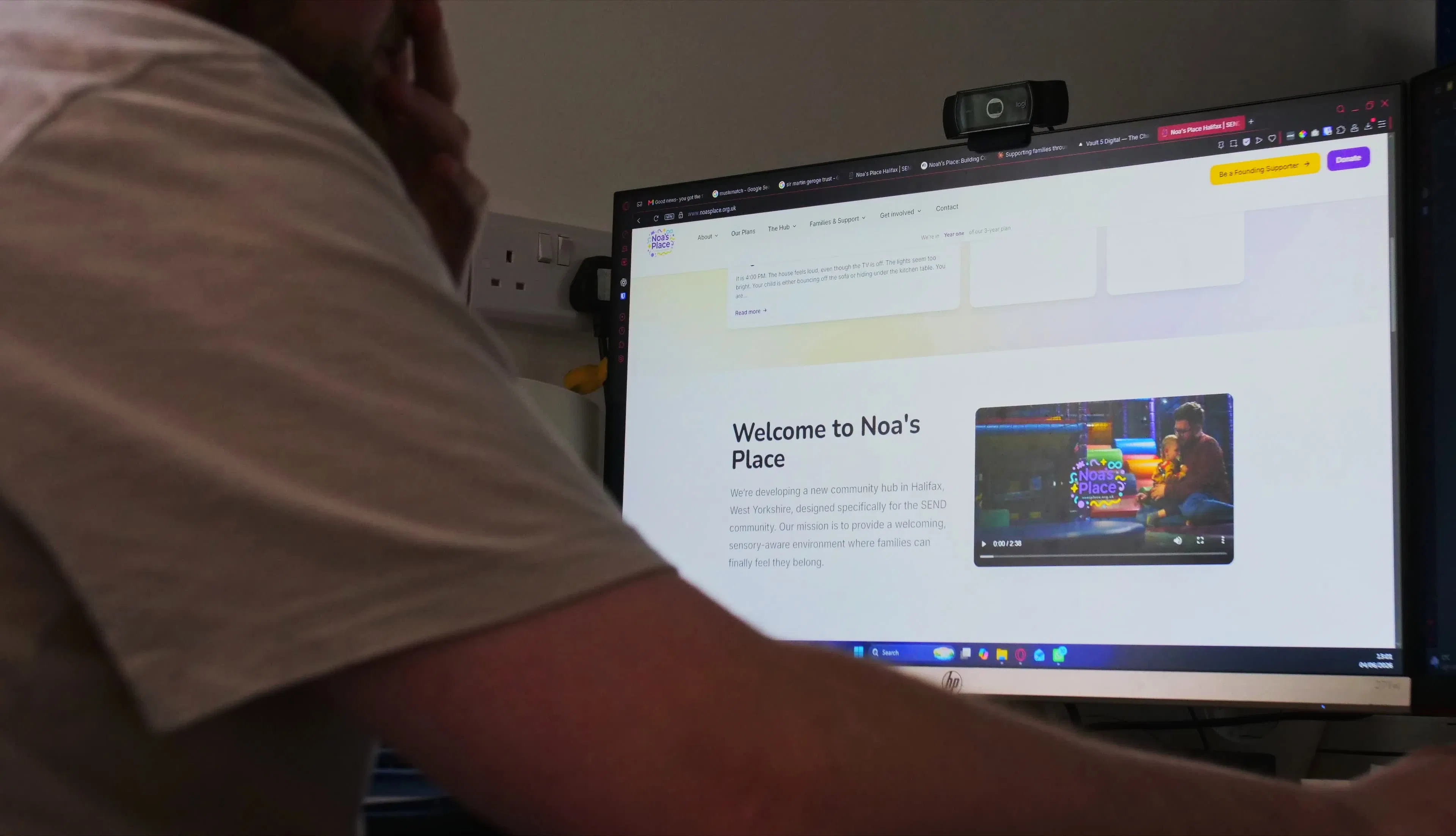
Your website, search campaigns, photography, video, and local presence shouldn’t all operate in separate bubbles.
Ask the agency how they’ll connect the work.
For example:
That’s a joined-up approach.
It also reduces the amount of work your team has to coordinate. Instead of briefing several suppliers and trying to make the pieces fit, you have one team working from the same understanding of your charity.
This is particularly important for smaller charities. Your marketing budget needs to work hard. Every activity should support the next step.
This is one of the most important questions to ask.
“Full-service marketing” can mean almost anything. Ask the agency to explain the monthly work in plain English.
Find out:
You should be able to see what happens after you sign.
For example, Vault 5 combines website design and maintenance, Google Ad Grant management, video production, photography, and Google Business Profile management into one monthly package.
That means one team. One invoice. One place to ask what’s happening next.
Clear scope. Fewer surprises.
You may meet a senior person during the sales process. That doesn’t always mean they’ll manage your account.
Ask:
The relationship matters.
Your agency will need to understand your values, your language, and the people your charity supports. That takes time. If the team changes every few months, you may find yourself explaining the same things repeatedly.
A consistent team can spot opportunities more quickly. They know which stories have already been told. They understand your supporters. They can make decisions without starting from scratch every time.
More continuity. Less repeating yourself.

Charity marketing needs care.
If an agency is creating photography or video, ask how they handle:
You should also check who owns your accounts and marketing assets.
Your charity should retain access to important platforms, including:
The agency may manage these accounts for you, but they shouldn’t hold your charity’s digital presence hostage.
Ask what happens if you decide to leave. A professional agency will answer clearly.
You can also review Google’s official Ad Grants guidance so you understand the basic requirements before discussing account management.
Marketing takes time, but that doesn’t mean you should wait indefinitely without answers.
Ask the agency:
Look for a calm, honest answer.
The right agency won’t hide behind impressions, clicks, or follower numbers. Those figures can be useful, but they’re only part of the picture.
The bigger question is whether the work is helping people find your charity, understand your work, and take the right next step.
A useful report should tell you:
No dashboard full of numbers that nobody has time to interpret.
As you compare agencies, be cautious if they:
Trust your instincts.
You don’t need the biggest agency. You need the right fit for your charity, your goals, your team, and your budget.
The best charity marketing agency won’t simply give you more tasks.
They’ll help you make better decisions.
They’ll turn complicated work into a clear plan. They’ll explain what matters and what can wait. They’ll protect your budget, your brand, and your mission.
And they’ll understand that marketing isn’t the reason your charity exists. It’s the support system that helps more people find, trust, and support the work you do.
At Vault 5, we bring website support, Google Ad Grant management, video, photography, and local search into one partnership built for UK charities.
More expertise. Less supplier juggling.
Take a look at our charity marketing services or book a free strategy call to talk through what your charity needs next.
No hard sell. Just a useful conversation about what’s working, what isn’t, and where to start.

Need help with your charity's digital marketing?
Vault 5 Digital manages Google Ad Grants, websites, video, and content for UK charities — one team, one invoice.
Book a free strategy call and find out what is stopping your growth.
Book a Free Strategy Call